From Ideas to Execution

Heath Howard
1/23/2026
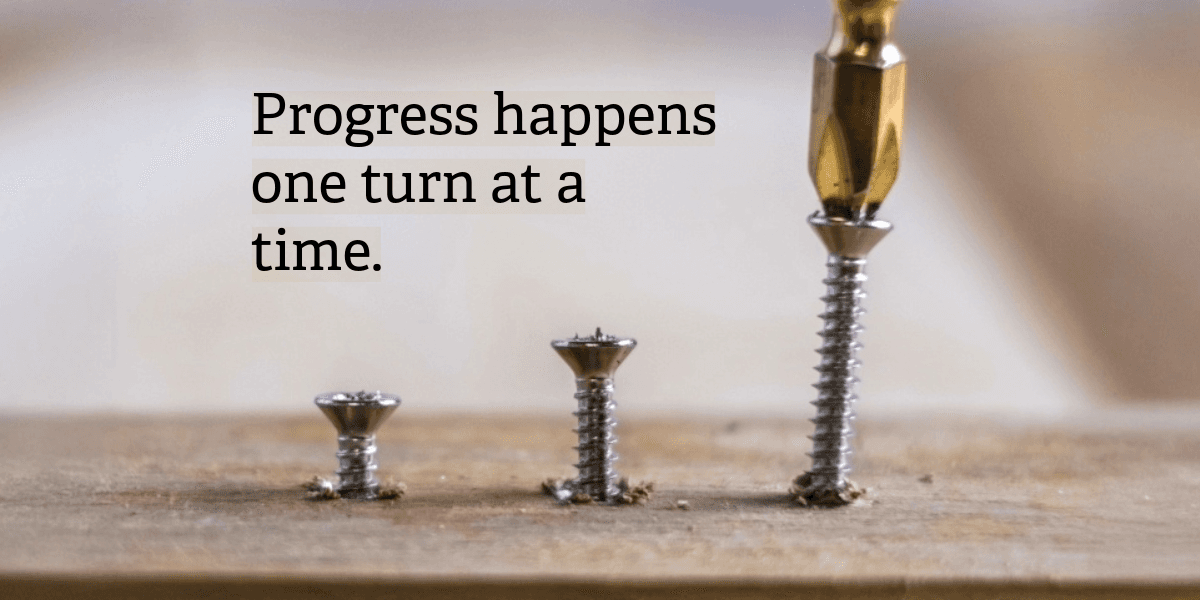
From Ideas to Execution: The Hardest Gap To cross
Most teams don’t fail because they lack ideas.
They fail because they stop at insight.
Ideas feels productive. You name the problem. Everyone nods. There’s agreement, maybe even enthusiasm. People leave the room feeling aligned and ready to make a difference.
And then very little actually changes.
I’ve seen this pattern throughout my career, and I’ve lived it myself.
Ideas Are Safe But Execution Costs Something.
Ideas are comfortable, maybe even exciting.
But execution involves risk and hard work.
When I was in my early twenties, taking my first swing at college but burned out and out of money, I had knew something had to change. That realization didn’t fix anything on its own. What mattered was what came next.
Dropping classes and moving away. Buying software I barely understood. Sitting down every day and building real websites for real people. The work was messy at first. I made some pretty ugly websites. But it moved me forward and each day I learned more and got better.
I was like the conqueror who burned his ships once his army arrived to shore so that there was no possibility of retreat.
That’s the gap many people never cross: the moment where ideas turns into commitment.
Ambiguity, Not Laziness, Is Usually the problem
People often assume their issue is motivation.
It usually isn’t.
What looks like procrastination or resistance is often just ambiguity. When people don’t know exactly what to do next, how long something will take, or what “done” actually means, hesitation is rational. I’ve watched capable teams stall not because they lacked skill or desire, but because no one translated insight direction into a clear next step.
Execution doesn’t start with more enthusiasm.
It starts by removing uncertainty.
You Don’t Think Your Way to Clarity. You Work Your Way There.
One of the most persistent myths in professional work is that you need full understanding before you begin.
That wasn’t true when I learned web development, and it isn’t true now.
I didn’t learn by reading about it in the abstract. I learned because real clients were waiting and real problems demanded solutions. Doing the work exposed gaps in my thinking faster than any planning session ever could.
Clarity is rarely something you arrive with.
It’s something you earn through action.
Why Insight Without Structure Breaks Down
Early on, teams can get away with improvisation. Shared context and good intentions carry a lot of weight.
As systems grow, that stops working.
Without structure, insight turns into rework. Assumptions turn into frustration. Optimism quietly turns into technical and organizational debt.
That’s why things like clear project definitions, written agreements, explicit tradeoffs, and fixed scopes matter. Not because they’re bureaucratic, but because they turn insight into something executable.
Structure is what allows learning to compound instead of resetting every cycle.
This Is Why Agile Ends with a Retrospective
This is also why Agile includes a retrospective at the end of every sprint.
Not as an airing of grievances—but to close the loop.
The questions are intentionally simple:
- What did we do well?
- What did we not do so well?
- How can we improve?
That third question is the hinge.
Without it, retrospectives become storytelling sessions. With it, they become engines of progress. Insight gets translated into a concrete change for the next sprint. Small adjustments compound. Teams don’t just talk about improvement—they practice it.
That’s how execution turns into learning instead of just motion.
This Is Where Numinex Works
At Numinex, most of our work lives in this gap.
Not dreaming up ideas.
Not rushing to code.
But helping teams turn insight into decisions, decisions into structure, and structure into software that actually gets used.
Most teams already know what isn’t working.
Very few are set up to do something about it.
Bridging that gap—calmly, deliberately, and honestly—is the work.
The Hard Truth
Insight and ideas feels like progress.
Execution is progress.
And the distance between them is where most projects quietly stall.
If you want different outcomes, you don’t need better ideas or better technology. You need a clearer path from insight to action—and the discipline to keep improving once you’re moving.
That’s the gap worth crossing.